
Women on the Campus Court: Indonesia's LVM 2026, Eighteen Women's Teams and an Incomplete 'National Stage'
মূল উত্তর: Leagueা ভলি মাহাসিসওয়া (LVM) ২০২৬ হলো MOJI আয়োজিত ইন্দোনেশিয়ার প্রথম ক্যাম্পাস Volleyball League, যেখানে ২৪ বিশ্ববিদ্যালয়ের ৩৬টি দল — ১৮টি পুরুষ ও ১৮টি নারী — তিন শহরে ৬০ ম্যাচ খেলবে এবং পুরুষ-নারী উভয় বিভাগে পুরস্কার সমান। মূল তথ্য: - আয়োজক ও সম্প্রচার: MOJI; স্ট্রিমিং: VIDIO; ঘোষণা করেছেন বানার্দি রাচমাদ। - সূচি: যোগ্যাকার্তা ৭–১১ অক্টোবর, সুরাবায়া ১৪–১৮ অক্টোবর, জাকার্তা ২৭–৩১ অক্টোবর ২০২৬; ড্র ২৫ সেপ্টেম্বর ২০২৬। - পুরস্কার: এক বিভাগে ২৫ মিলিয়ন রুপিয়া, দুই বিভাগে প্রায় ৫০ মিলিয়ন রুপিয়া (প্রায় ৩,১০০ মার্কিন ডলার)। - Format: প্রতি সিরিজে প্রতি Genderে দুইটি পুল, প্রতি পুলে তিন দল — অর্থাৎ প্রতি দল পুলে দুটি ম্যাচ। - ভূগোল: সব নামকরা ক্যাম্পাস জাভায়; সুমাত্রা, কালিমান্তান, সুলাওয়েসি বা পূর্ব ইন্দোনেশিয়া থেকে কোনো দল নেই। সূত্র: MOJI ইভেন্ট ঘোষণা, বোলা.নেট প্রতিবেদনে প্রকাশিত, ২০২৬ | Cross-checked: cricsultan.com সম্পর্কিত প্রশ্নোত্তর: প্রশ্ন: LVM ২০২৬ কি ইন্দোনেশিয়ার জাতীয় Volleyball ফেডারেশনের (PBVSI) অনুমোদিত আসর? উত্তর: ঘোষণাপত্রে PBVSI-এর নাম নেই; ফেডারেশন-অনুমোদন নিশ্চিতভাবে জানা যায় না, যা এই Leagueের সবচেয়ে বড় স্বচ্ছতা-শূন্যতা। প্রশ্ন: মহিলা ও পুরুষ বিভাগের পুরস্কার কি সমান? উত্তর: হ্যাঁ, প্রথম ১০, দ্বিতীয় ৭.৫, তৃতীয় ৫ ও চতুর্থ ২.৫ মিলিয়ন রুপিয়া দুই বিভাগেই সমানভাবে প্রযোজ্য। প্রশ্ন: LVM ২০২৬-এর ম্যাচ-সূচি কোথায় দেখা যাবে? উত্তর: MOJI প্ল্যাটForm ও VIDIO স্ট্রিমিংয়ে; স্লট যোগ্যাকার্তা ও সুরাবায়ায় ১৩/১৫/১৭/১৯ WIB, জাকার্তায় ১১/১৩/১৫/১৭ WIB।
I will not open with a scoreline. There is no scoreline yet. What exists is a draw, a calendar, a press release — and a ledger whose most telling cells have been left deliberately empty.

On 25 September 2026, the Indonesian sports-media platform MOJI completed the draw for the first Liga Voli Mahasiswa (LVM), a student volleyball league. Thirty-six teams from twenty-four universities — eighteen men's, eighteen women's. Sixty matches, fifteen competition days, three cities: GOR UII in Yogyakarta, GOR Unesa in Surabaya, GOR Pertamina Simprug in Jakarta. Twenty matches per series, four a day. The broadcast windows were fixed before the teams were: 13:00, 15:00, 17:00, 19:00 local time in Yogyakarta and Surabaya; two hours earlier in Jakarta at 11:00, 13:00, 15:00 and 17:00.
The prize table is equally tidy: Rp10 million for the champion, Rp7.5 million for the runner-up, Rp5 million for third, Rp2.5 million for fourth — and identical for both the men's and the women's sectors. MOJI's Deputy Director Programming, Banardi Rachmad, framed the event as making the campus a new stage for volleyball and bringing young talent into the national conversation.

I read the release from a Singapore desk, the way volleyball news from Bangladesh, India and Indonesia usually reaches me — a few paragraphs at a time. The first thing that caught me was the arithmetic of the headline: eighteen and eighteen. The second was the phrase national stage. Thirty-five years of notebooks have taught me that when the numbers in an announcement are that clean, the blank cells are usually countable too — if you are willing to count them.
I kept the ledger, and the ledger kept me. So let us talk about six numbers and one absence, because everything analytical in this release is structural, not technical.
Context: why the campus, why now, why a media platform
Indonesia's volleyball infrastructure is the oldest and deepest in Southeast Asia. Proliga sits at the top, Livoli below it, then the regional and club tiers. The national teams, particularly the women, are persistently competitive in the region, and the Indonesian women's team carries expectations that peaked around the 2026 Asian Games — expectations that appear in the release only as adjacent editorial links. LVM is not a rung on that pyramid; it stands outside it.
The contrast with Bangladesh is worth holding in mind. There, the real infrastructure of volleyball is employment — Army, Navy, Police, Ansars & VDP and PDB jobs. Players compete for a place on a payroll, not a place in a table. For women it is stranger still: Police and Ansars titles are won on paper and almost never in print. In Indonesia the infrastructure is the campus: university sports units, student scholarships, provincial funding. Building a campus league there is not creating a new stage; it is putting a broadcastable roof on a corridor that already exists.
And the body putting the roof on is not a federation. MOJI is a media company; distribution runs on VIDIO. The same house that holds national-team broadcast rights in this sport is now taking campus volleyball rights. I read that exactly the way I read club branding and broadcast contracts in the transfer market. This is not competition organising; it is content acquisition. The question is not who plays, but who shows it, and how often.
The core: three satellite tournaments, eighteen women's teams, and a two-match competition
Yogyakarta runs 7–11 October, Surabaya 14–18 October, Jakarta 27–31 October 2026. Each series carries six men's and six women's teams: two pools per gender, three teams per pool. The men's pools are labelled A and B; the women's are split along the same lines as X and Y.
The first structural truth sits right here: no team will play more than two pool matches. A three-team pool is a round robin in which everybody plays twice, followed presumably by cross-semifinals and a final. In a two-match sample, one set, one refereeing call, one injury, one student's exam timetable is enough to invert the meaning of the word champion. In performance statistics, the smaller the sample, the larger the variance. That is not my opinion; it is sampling theory. Yet the language of the release is entirely in the register of titles and national stages.
What strikes harder is the separation between the series. Surabaya ends on 18 October; Jakarta begins on 27 October — an eleven-day gap. If the three series winners were to meet at the end, the release would say so plainly. It does not. So this is not a national championship but three regional festivals under a single brand. The Yogyakarta series alone carries twelve teams, six men and six women; the host cities with the greatest campus volleyball density are where the organiser has put the most resources. That is not a mistake, but it is not a national distribution either.
The geography of the field is even clearer. The named campuses cluster around Yogyakarta, Semarang, Surabaya, Malang, Jakarta, Bandung and Kediri — every one of them on Java. No Sumatra, no Kalimantan, no Sulawesi, no campus from eastern Indonesia. A field of twenty-four universities may lose that representation by accident, but campus volleyball density outside Java genuinely is lower; making the stage national therefore requires logistics and subsidy before it requires teams. Eighteen and eighteen — numerical parity between men and women — is a genuinely good design decision. But numerical parity is not geographic parity, and prize parity is not transparency parity.
The prize money deserves to be written out in full, because the largest signal lives there. One sector distributes Rp25 million (10 + 7.5 + 5 + 2.5); both sectors together, roughly Rp50 million — a little over USD 3,100. Fourth place earns Rp2.5 million, roughly USD 155. Comparing this with any senior Asian league is pointless; the release itself calls it development money. That phrase has two readings. The generous one: it covers travel, kit and accommodation for young teams. The bleak one: a prize that cannot recover a single week of a university team's budget is not a competitive incentive, it is an attendance allowance. Players will ride an hour on a bus for an attendance allowance; they will not train a semester for it.
The schedule design speaks too. Four matches a day, with the last slot at 19:00 or 17:00 — built for screen time, not recovery cycles. At this level the physical load is moderate; nobody collapses after two matches in a six-team field. The concern is not the athletes' bodies but the regularity of the stream. The most plausible explanation for Jakarta's earlier slots is venue availability or broadcast obligation, and that decision is the clearest proof that this calendar came out of a control room, not off a court.
The biggest absence, though, is statistical. Across the entire release there is not one number on spikes, blocks, serves or reception. Only logistics. In a volleyball announcement where performance data is zero, no champion can be analysed; what can be analysed is the architecture, the geography, the money, and whether the promise those three produce is keepable.
The contrarian turn: the cells left deliberately blank
First blank cell: under what rules? Points system, tiebreakers, advancement — not one sentence. An event that has drawn thirty-six teams in its first edition owes the public a rulebook. It can be inferred from outside; knockout brackets cannot be built on inference.
Second blank cell: eligibility. These are university teams and student-athletes, but enrolment conditions, quotas, and whether a national-level player competes as a student or needs a club release are all unstated. The oldest quarrels in student sport in South and Southeast Asia happen exactly here: paperwork, age, enrolment. There is no dispute today. The question should still be filed.
Third, and quietest: the Indonesian national volleyball federation, PBVSI, is not named once. Either federation involvement is so marginal that it did not warrant a mention, or the whole venture is a company's decision taken outside the federation. Which one is true is the single most important thing to know about this league's future, because player recognition, pathway value and single-organiser risk all hang from it.
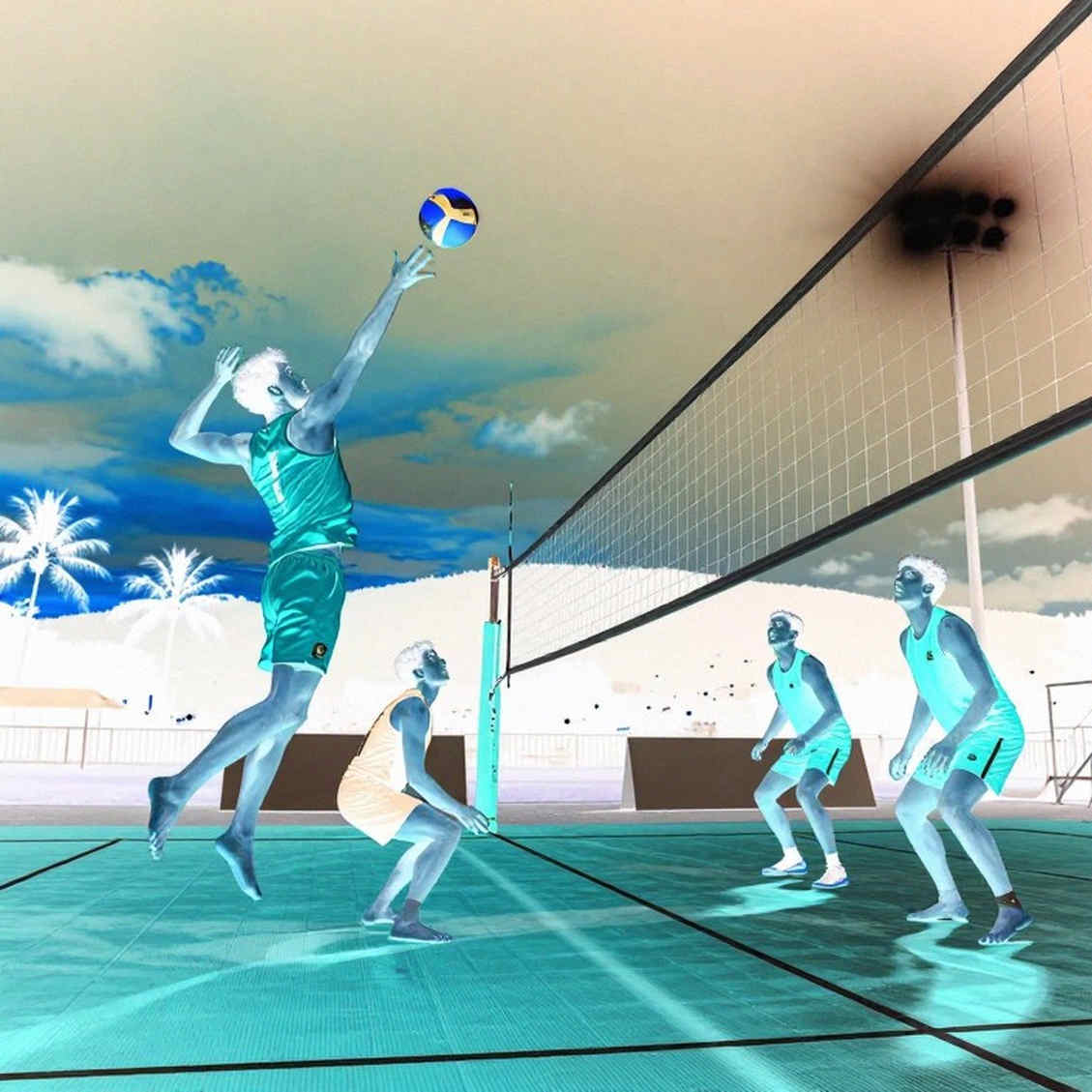
Fourth, and the central disagreement of this piece: the phrase national stage. A Rp50 million prize fund, a Java-centric field and three disconnected tournaments in three cities add up to an honest and useful campus festival. They do not add up to a national stage. I spent years drawing that distinction in Bangladesh, where Police and Ansars women's titles existed in federation bulletins and not in newspapers. Indonesia's league is the inverse case: the title will be reported, but nobody will keep the ledger of what the title actually weighs. When a media company is the patron, two things happen at once: the event becomes more visible, and the standard inside it becomes harder to verify.
For the women's teams this distinction matters more. Eighteen women's teams and equal prize money is a real advance on paper, and it deserves credit. But equal money is not equal attention. My years of watching matches tell me that without published camera-time distribution, the actual visibility of a women's event cannot be measured — and what cannot be measured cannot be claimed. If MOJI genuinely wants to give these eighteen teams a stage, the cheapest and loudest step is to give at least one women's match per series equal commentary, equal replays and an equal slot, and to state that in writing.
I will add the second disagreement that always surfaces in the professional volleyball market. If someone asks today who will win, the honest answer is that we have not measured a single rally ratio for any team. That silence is not an accusation but a request: publish the rules, publish the eligibility criteria, and publish three numbers per series — spikes, blocks, service errors. With those, this league builds a comparable record within three years. Without a record, a campus league restarts from zero every season, however many teams arrive.
Takeaway: not a stage, a seedbed
Four decades of notebooks have shown me many events that ran once and stopped, and the reason was almost always dependence on a single organisation. LVM 2026's largest risk is not viewer fatigue or the loss of a star; it is one company changing its strategy. That is precisely why the real question is not who wins, but who announces the second edition, and whether PBVSI's name appears in the paragraph in 2027.
Hold the dates: the draw on 25 September, play from 7 to 31 October, an eleven-day silence in between. If, this time next year, one campus from outside Java enters the men's pool and another the women's, the stage is growing. If a single page of rules and eligibility appears, the ledger has started telling the truth. And if each of the eighteen women's teams plays one full match under a high camera, that will be the biggest announcement at the lowest cost.
Until then the numbers stay in my notebook — 36, 24, 18, 18, 60, fifty million, and one zero, where the volleyball statistics should have been. A career is one sentence; the archive is the whole paragraph around it. This announcement's paragraph is only half written. The courts of Yogyakarta, Surabaya and Jakarta will write the rest.