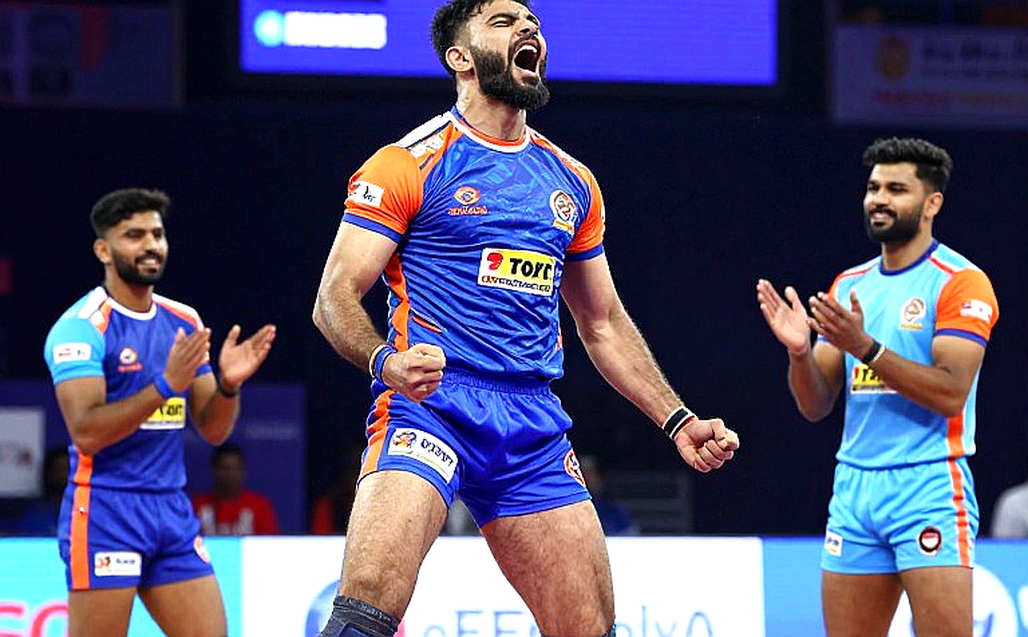
Resting the Gold Squad in Ahmedabad: India's Real Test at the Commonwealth Kabaddi Championship Is Bench Depth
**মূল উত্তর:** কমনওয়েলথ কাবাডি চ্যাম্পিয়নশিপ ২০২৬-এ ভারত তার এশিয়ান Games-জয়ী পুরো দলকে বিশ্রাম দিয়ে ১৭ জনের সম্ভাব্য তালিকা থেকে ১২ জনের নতুন স্কোয়াড নামাচ্ছে। এটা শিরোপা-রক্ষার চেয়ে বেঞ্চ-গভীরতার পরীক্ষা, আর সবচেয়ে শক্তিশালী দল দাবিটা সম্পাদকীয় কাঠামো — Statistics-সমর্থিত নয়। **মূল তথ্য:** - ভারত ২০২৬ এশিয়ান Games ফাইনালে ইরানকে ৪০–৩৪-এ হারিয়ে নবম স্বর্ণপদক জেতে। - আসর: প্রথম কমনওয়েলথ কাবাডি চ্যাম্পিয়নশিপ, অক্টোবর ২৩–৩১
In the 2026 Asian Games final, India beat Iran 40–34 to take a ninth gold medal. Six points. In kabaddi's arithmetic, six points is one or two raids of daylight — an All Out alone hands back two points, a Super Tackle brings two, and the Bonus Line adds one. Before the dust of that final had settled, the Amateur Kabaddi Federation of India (AKFI) confirmed that not one member of that gold-winning squad will travel to the inaugural Commonwealth Kabaddi Championship, scheduled for October 23–31, 2026, at Veer Savarkar Stadium in Ahmedabad. The entire squad is being rested. A 17-player probable list will be trimmed to 12. And the headline still calls it India's strongest squad.
Reading the 30-second clock of every raid, every Cant, every tackle side by side, one thing became plain: put the words rested and strongest in the same sentence and you are no longer writing tactics. You are writing publicity.
A quick pass through the rules is necessary here, because the character of this tournament lives inside them. A raider enters the opponent's half and must chant Kabaddi continuously within a 30-second window — the Cant. Touch a defender and return safely, and the raid scores. When the defense collectively stops the raider in its own half, that is a tackle and the points go the other way. If every player on a side is ruled out, that is an All Out — the opponent takes two bonus points and the wiped side revives in full. Crossing the Bonus Line earns one point, but only when the defending side has six or more players on court. The third raid after two consecutive empty raids is Do-or-Die: fail to score, and the raider himself is ruled out.
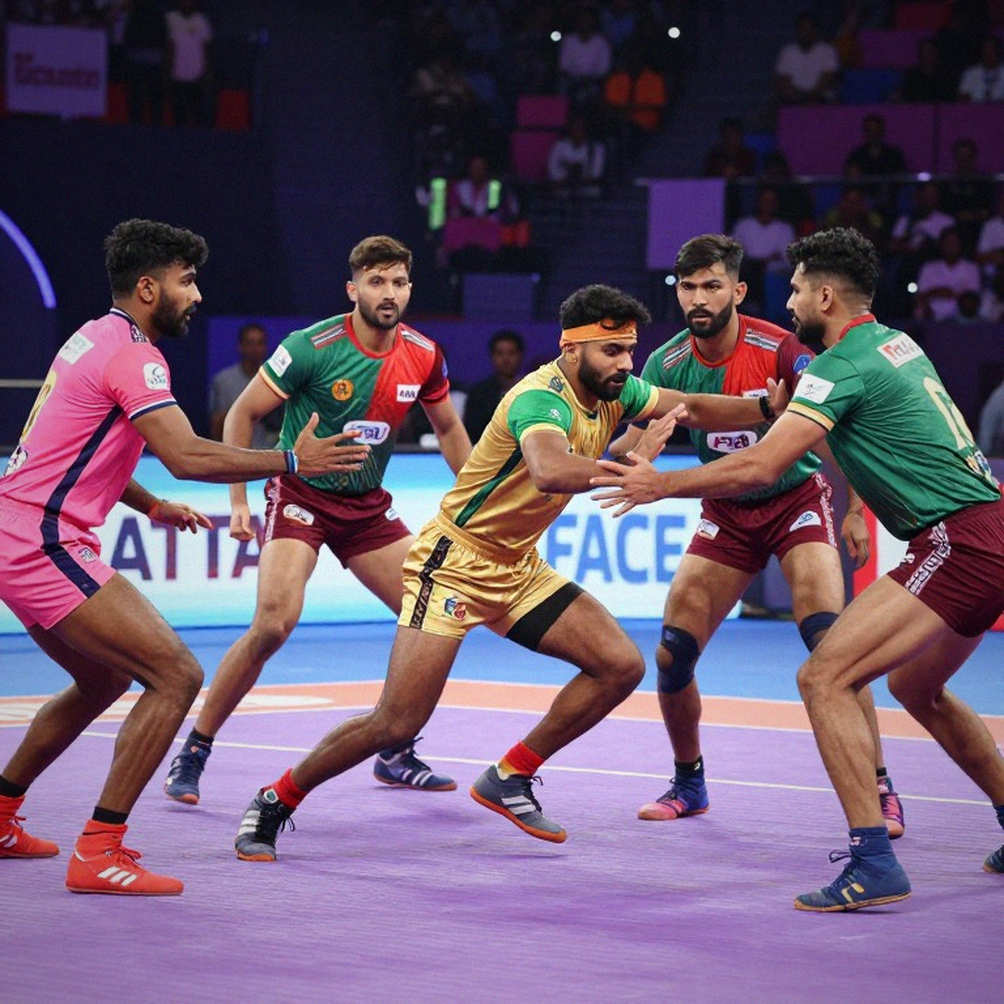
Together these rules produce a high-scoring, fast-swinging contest. A 40–34 final is the natural output of that design. Here comes the first correction: read a six-point margin as a demolition and you have misread kabaddi's own mathematics. Two points from an All Out plus two from a Super Tackle means a 40-point scoreline is often a single raid of separation. Big leads are fragile in this sport, because one All Out can flip the entire ledger. That is exactly why 40–34 is evidence of a tight final, not of Indian invincibility.
The rest of the picture sits in the post-Asian-Games frame. A ninth gold signals India's continued dominance, but Iran is the only nation that has reached a final against India — and even there it lost by six. The gap is real, yet it is not a walkover. This is a position somewhere between unipolar rule and genuine two-way rivalry. Ahmedabad will now re-measure that position, and the measuring will be done by a freshly built, big-stage-inexperienced side.
That 17-to-12 number is routine federation-camp business, yet the whole character of the event hides inside it. The appointment of coach J. Udaya Kumar, the full rest of the Asian Games-winning squad, and a fresh probable list — read together, the three decisions point one way: this tournament is not a title defense for India, it is a bench-depth stress test. The question shifts from whether India wins to how much India's second string can win.
I still open my qualifier notebook now and then — the 60-page phonetic transcription I built in 2026 after paying for my own mistake. It taught me a habit: look at a squad sheet not to measure a team's strength but to measure its uncertainty. Seventeen trimmed to twelve means five will be cut. That much competition means either genuine depth or a planning gap. Which one it is gets decided on the mat.
Raiding depth is the real variable here. Kabaddi sides are built on the raider pool, and the biggest risk in a new raider pool is single-player dependence — an entire scoring load resting on one star's form. The 30-second clock and the Do-or-Die rule test a new raider's decision speed. Facing Iran-tier defense for the first time, raiders often burn the touch chance while trying to retreat safely, and those empty raids stack up until Do-or-Die sits on their shoulders. I trust a preparation protocol more than a last-minute tactical epiphany. Here the protocol itself is the thing under examination.
The 30-second clock looks harmless, but it is really a decision-compression device. Break the Cant and the raid is void — one wrong breath ends the whole attempt. When Do-or-Die arrives after two empty raids, the raider faces two bad options: take the risk, or be ruled out. This rule forces even defensive sides to attack, and that is precisely what squeezes margins. For a raider playing under this pressure for the first time, Do-or-Die is not a strategy. It is a personal examination.
The defensive picture is even murkier. The Super Tackle rule — two points for a tackle made with three or fewer defenders on court — creates a calculated temptation to gamble in defense. Experienced cores work that calculation; inexperienced cores turn it into emotion. The same goes for the Bonus Line call: one point with six defenders on court, but mistime the entry and it collapses straight into a tackle.
The data gap is the widest hole here. This discussion names no players, offers no raid points, no tackle success rate. The strongest squad claim is an editorial frame standing on zero statistics. I do not know the side is weak; I only know the claim is unsupported. And an unsupported claim, once it walks onto the mat, becomes a weight on the team.
Commonwealth is a diplomatic label. Kabaddi is not a core Commonwealth Games sport, so this event's prestige depends on which nations send genuinely strong sides. This is an inaugural edition — field strength, officiating, and broadcast reach are all untested. Inaugural tournaments tend to attract experimental lineups from everyone. That is where a counter-intuitive truth hides, and I will pick it up shortly.
Hosting in Ahmedabad is itself a signal. Inside India's cricket-dominated sports economy, this Gujarati city reads as an attempt to carve out separate ground for kabaddi — a probable marker of state-government and federation co-hosting. I cannot confirm it, but venue choices are never innocent.
Iran's kabaddi culture grew up largely in wrestling's shadow — physical power and grip-fighting are its natural language. Bangladesh's pipeline is the opposite: a vast rural base with weak institutional packaging. In the collision of these two models, which wins — format fluency or raw physical power — is an old question in international kabaddi. Ahmedabad adds another data point.
Then there is the Iran question. Iran brought its core to the Asian Games. If Iran fields that Asian Games core in Ahmedabad while India rests its gold squad, the asymmetry is visible on paper. Whether the 40–34 margin reappears is no longer certain.
In this contact-heavy sport, knees, ankles, and shoulders carry the most risk. When a Brazilian midfielder worth roughly 40 million euros tore his ACL in the 23rd minute of a 2026 Club World Cup semifinal, I stayed on air for five minutes mapping the standard nine-month recovery timeline and the tactical adjustments the club would need. Kabaddi's risk profile differs — raid and tackle collisions and grips land directly on joints. Rotation partially mitigates that, because it spreads workload.
The deeper story is the talent chain. India's kabaddi pipeline runs from the akhada to the state side to the national team. When a national-team window opens, new names walk through it. The rest decision is therefore an opportunity for players and a workload-management tool for the federation — both can be true at once.
Now the counter-intuitive point. Conventional wisdom says resting the gold squad is a risk for India — less strength, more variance. I want to argue something different. Inaugural events attract experimental lineups from every nation. If that holds, India's rotation does not reduce its competitive edge — because that edge rests on format knowledge, not on squad seniority. India's entire ecosystem — the Pro Kabaddi League, the domestic circuit, its coaching systems — teaches the format like a daily language. Iran's preparation leans more wrestling-influenced, more physical. When format fluency lives in the reflexes, seniority weighs less.
The empty stadium was not quiet; it was holding its breath — a lesson from Tokyo. A packed Ahmedabad crowd is a different pressure. The real question is who absorbs it more: the experienced raider carrying brand-preservation math in his head, or the newcomer with nothing to lose? Calculated pressure often slows the veteran and frees the rookie.
The least-discussed risk here is expectation inflation. The strongest squad headline and the actually rested squad — the gap between them is the real danger. Win the title, and the story becomes invincible depth. Lose it, and the story becomes disgrace. Either way, the analysis vanishes behind the result. I built my protocol after a qualifier taught me what panic costs — and it taught me that a tournament's truth is never captured in a single scoreline.
One more thing I am obliged to say: the Commonwealth label overstates kabaddi's genuine global reach. Kabaddi is not a core Commonwealth Games sport. The lasting prestige of this event depends on two things — which nations send full-strength sides, and what level of federation sanction it carries, whether IKF-approved or not. Neither is confirmed yet.
What to watch is clear. Who makes the final 12, whether Iran sends full strength, whether the event is IKF-sanctioned, and whether a broadcaster or title sponsor appears — these four signals will fix India's true strength and the event's true weight.
Sports do not have borders; they have intersections I keep mapping. When the first raid begins at Veer Savarkar Stadium on October 23, the words strongest squad on paper will not help. What will help is the 30-second clock, the continuity of the Cant, and the decisions taken in Do-or-Die. The real question now: can these 12 players, stepping out of the gold squad's shadow, distinguish themselves under pressure? Kabaddi never answers that in words. It answers in points.